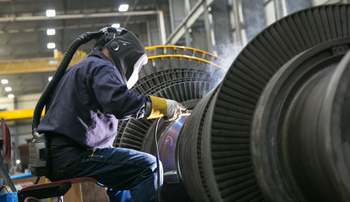
Ana Amicarella, CEO of EthosEnergy, said One Equity Partners’ expertise in mergers and acquisitions will help expand service offerings and improve operational efficiencies.
Ana Amicarella, CEO of EthosEnergy, said One Equity Partners’ expertise in mergers and acquisitions will help expand service offerings and improve operational efficiencies.

Harbin Electric and GE Vernova delivered steam turbines, generators, and three 9HA.01 gas turbines, producing 2 GW of power to satisfy China’s decarbonization goals.
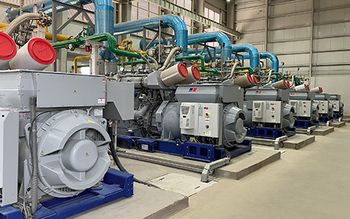
The plant has no access to the public grid, so each Rolls-Royce mtu genset supplies 2,500 kW of electric power to manufacture medium-density fiberboard.
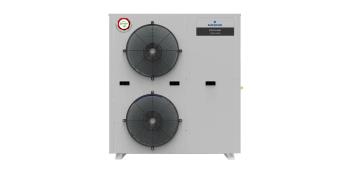
Residential and commercial heat pump programs aim to develop pumps that perform at sub-zero temperatures and as emissions-effective rooftop units.
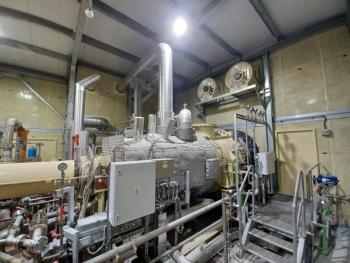
The new power plant replaces the current facility and reduces natural gas consumption by 15%.
The new lubricants and additives include FSE-TurboCool 32 and 46; FSE-TurboCool PG; FSE-TurboCool FG; and FSE-TurboCool CC to minimize downtime and extend lifespan.
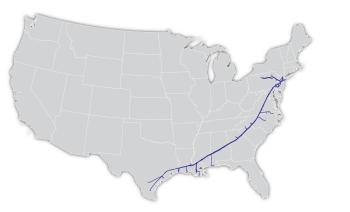
The project adds 423,400 Dth/d of fully contracted pipeline capacity, two new all-electric compressor stations, and upgraded metering stations to accommodate demand.
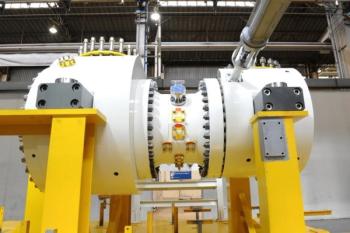
Eight main refrigeration compressors driven by LM6000PF+ gas turbines and eight expander compressors will assist Woodside Energy in executing Phase 1 of Louisiana LNG.
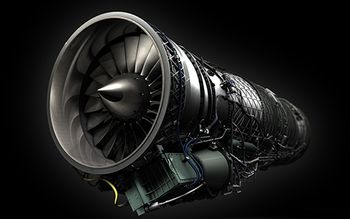
The engines, to be assembled at the ITP Aero Facility and modularized by Rolls-Royce, are scheduled for delivery to the Spanish Air Force in 2029.
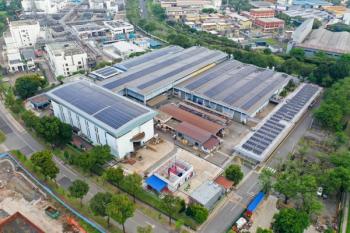
With over $80 million currently invested in the Global Repair Service Center, GE Vernova plans to meet regional population growth and power demand by keeping its fleets operational.
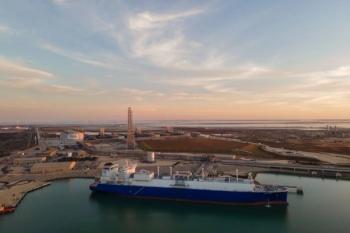
Corpus Christi LNG Stage 3 consists of seven midscale liquefaction trains, with an expected total production capacity of over 10 mtpa of LNG upon Bechtel’s completion and delivery.
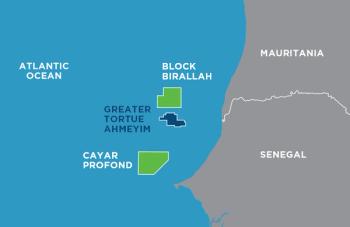
Gas began flowing from wells to the floating production, storage, and offloading vessel and once commissioned, Phase 1 is expected to produce around 2.3 mtpa of LNG.

EthosEnergy provides aftermarket maintenance, repair, and overhaul, as well as outsourced operations and maintenance to power generation and industrial customers.
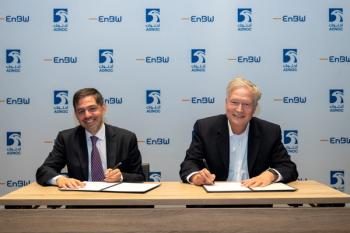
EnBW will receive 0.6 mtpa of LNG over 15 years, with deliveries starting in 2028 after Ruwais LNG enters commercial operation.
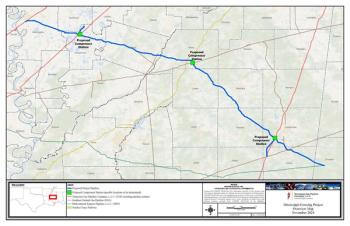
The project will transport up to 1.5 Bcf/d of natural gas from Greenville, MS to Butler, AL, using two compressor stations with access to third-party pipelines.
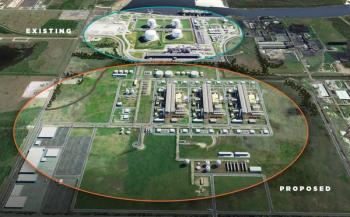
The Lake Charles LNG export facility will be constructed on a brownfield regasification site with four existing LNG storage tanks, two deep water berths, and other LNG infrastructure.
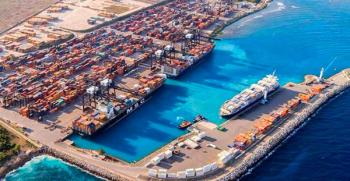
Carlos Mousadi, Regional Commercial Leader at GE Vernova, shares how the company is supporting the Dominican Republic’s energy transition to renewables and natural gas.
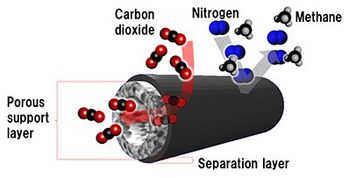
Toray will upscale prototypes and conduct demonstration tests with biogas, natural gas production development companies, and other partners to accelerate practical application.
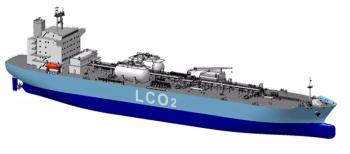
Under its updated designation, MILES will design and develop new commercial liquefied CO2 carriers and provide functional design for alternatively fueled ships.
Following damage from Hurricane Ida, Ebara Elliott Energy reconstructed the collapsed east wall, installed a high bay roof, built a new exterior, and more.
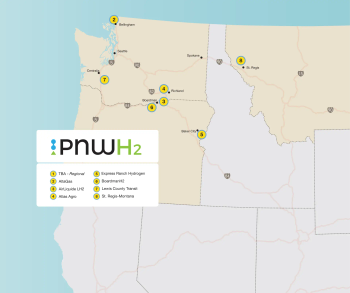
Node 6 will produce hydrogen via electrolysis and peak-power generation with 100% hydrogen-capable turbines.
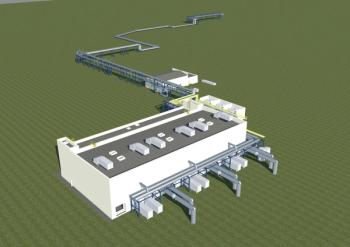
The heat-pump system uses Rhine water as its energy source and operates with a natural refrigerant in a closed-loop system.
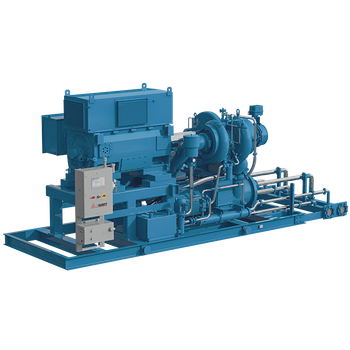
The P650 features a removable air-end design and horizontally split air-end components to allow for undisturbed inspection and maintenance.
The letter increases the planned data center’s capacity from 90 to 250 MW to support heightened electricity demand; New Era Helium will supply gas at a fixed price for five years.
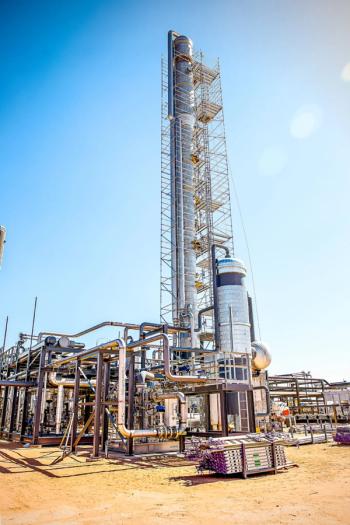
Acid gas injection wells and an amine unit enable sour natural gas treating, while the $285M acquisition supplements the company’s crude and produced water gathering.
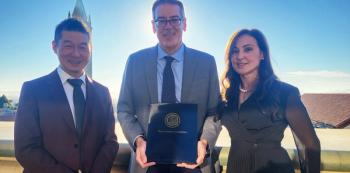
Baker Hughes will fund collaborative research to develop materials for carbon capture, utilization, and storage; hydrogen; and clean power generation, among others.
Generadora San Felipe's natural gas combined-cycle power station will feature GE Vernova’s gas and steam turbines coupled to generators, a condenser, and more.
Production of variable-speed compressors—a key component in heat pumps—is expected to start in October 2027.
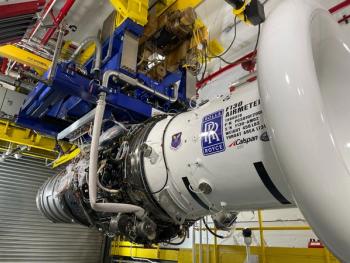
Following two years of design collaboration with the U.S. Air Force and Boeing, the F130 aircraft engine will soon enter production for the B-52J Stratofortress.
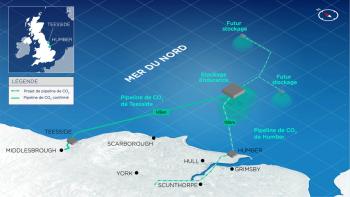
TechnipFMC will deliver and install an all-electric subsea system comprised of trees, manifolds, umbilicals, and infield flowlines to allow CO2 transport over long distances.