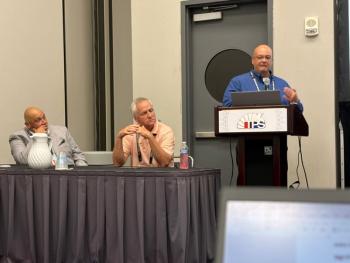
Chuck Requet, engineering manager at Cutsforth, LLC, shares practical guidance for teams that are building or improving a reliability program for rotating equipment. He says an organization’s first step should be an overall plan based on a criticality survey that identifies its most important equipment. That way, spending on condition monitoring goes where it does the most good, instead of toward sensors or technology bought without a plan.
Requet explains how multi-physics monitoring brings data streams such as vibration and temperature together into one approach. He says software that overlays these technologies lets teams look at a machine from several angles at once, which gives a clearer picture of what the problem is. He also stresses that collecting data is not enough. A good asset management system tracks each issue from the moment it is detected until it is solved and its root cause is found, so the same problem does not happen again. On machinery protection, he says moving away from end-of-life protection devices will not happen overnight. Teams should plan replacements in order of criticality across outages, and drop-in replacement systems can make the swap easier. Looking ahead, he describes how artificial intelligence (AI) in condition monitoring brings no preconceived notions or bias to a problem. That lets it surface possibilities engineers might not consider and diagnose problems faster.
Reliability engineers, maintenance managers, and operations leaders responsible for turbomachinery will come away with a clear order of priorities for building a condition monitoring and protection strategy. The discussion gives practical direction on where to invest first, how to combine monitoring data into useful insight, and how to plan protection system upgrades without disrupting operations.