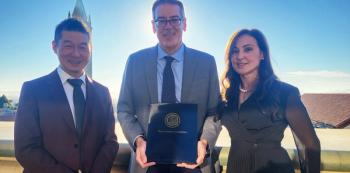
Baker Hughes will fund collaborative research to develop materials for carbon capture, utilization, and storage; hydrogen; and clean power generation, among others.
Baker Hughes will fund collaborative research to develop materials for carbon capture, utilization, and storage; hydrogen; and clean power generation, among others.

Production of variable-speed compressors—a key component in heat pumps—is expected to start in October 2027.
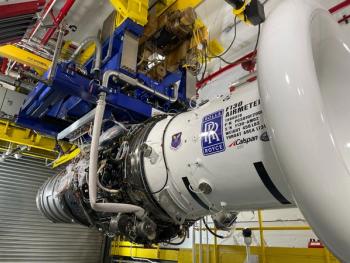
Following two years of design collaboration with the U.S. Air Force and Boeing, the F130 aircraft engine will soon enter production for the B-52J Stratofortress.
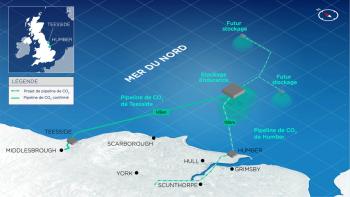
TechnipFMC will deliver and install an all-electric subsea system comprised of trees, manifolds, umbilicals, and infield flowlines to allow CO2 transport over long distances.
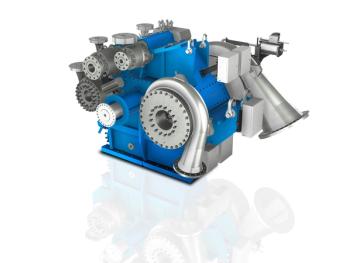
The supply scope for bp’s enhanced gas recovery and carbon-capture project includes three integrally geared CO2 compressors equipped with an electric motor and variable frequency drive starter.
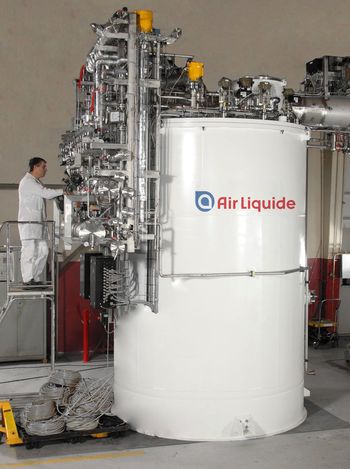
Air Liquide will build a hydrogen liquefier and retrofit a hydrogen production unit to use renewable ammonia as feedstock instead of natural gas.
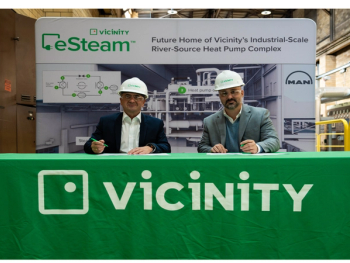
A 35-MW steam pump system at Vicinity’s Kendall Station will use thermal energy from the Charles River to produce high-pressure steam and lower fossil fuel emissions.
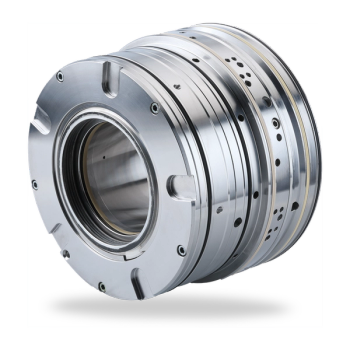
EthosEnergy will join its seal system design, project management, and compressor maintenance with EagleBurgmann’s industrial sealing technology to support customer needs.
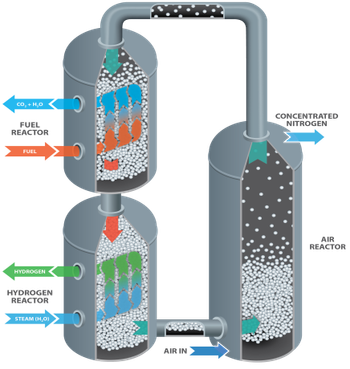
Babcock & Wilcox will use the funding to install chemical looping technology at a low-carbon hydrogen production facility powered by coal and biomass.
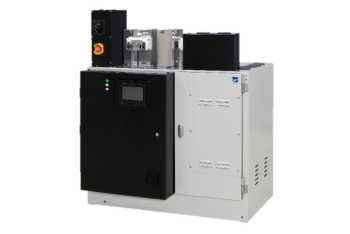
The Model LPCMN neutralizes process gases by reducing byproduct adhesion and NOx/COx emissions and offers a compact design, hydrogen fuel options, and high airflow capacity.
The 138-Kv breaker and numerous capacitor banks will regulate voltage dips and swells to protect customer and company equipment during tests up to 100 MW.
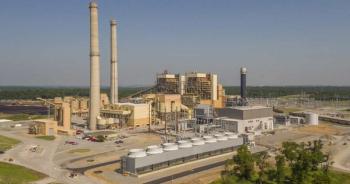
Unit 4 will feature fast-start, simple-cycle capabilities and the largest selective catalytic reduction system to reduce emissions and transition away from coal-fired power.
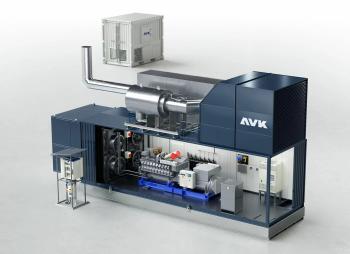
These generators were largely deployed at data centers and commercial real estate developments across Europe, and AVK obtained orders for 120 additional units in 2025.
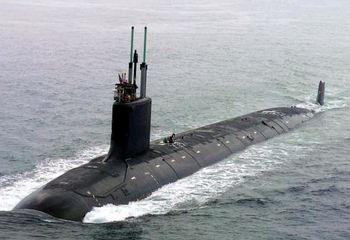
Curtiss-Wright and Sintavia’s additively manufactured metal impeller design was installed in the submarine pump system of a Navy vessel and tested at a facility in Bethlehem, PA.
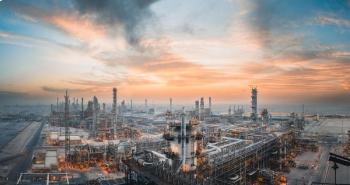
Ebara Elliott Energy will deliver 22 units across its compressor, pump, and turbine product lines to the AMIRAL project—a refinery equipped with a mixed-feed cracker and petrochemical units.
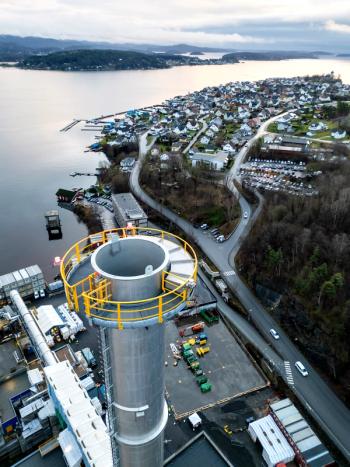
The Brevik plant, starting operation in 2025, is part of the Longship project—a complete value chain for the capture, transport, and storage of industrial CO2 emissions.
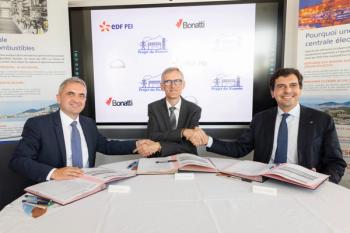
MAN Energy Solutions will provide eight 18V51/60 engines and its after-sales brand will provide spare parts, technical services, and more over 25 years.
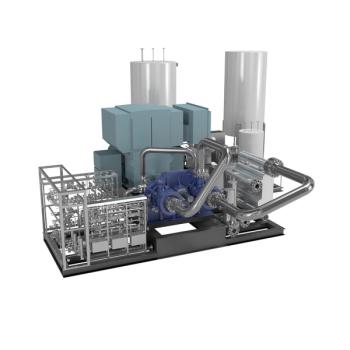
Hanwha Power Systems offers insights into its supercritical CO2 systems that leverage high energy and dual gas/liquid properties to efficiently drive larger machines.
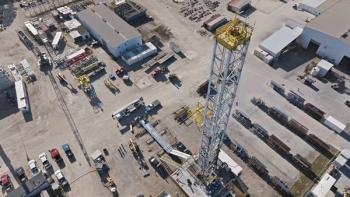
The partnership explores deeper geothermal energy sources to lower the plant’s fossil fuel consumption, greenhouse gas (GHG) emissions, and cost compared to traditional geothermal.
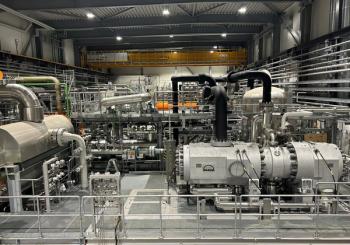
The CO2-based seawater heat pump operates with a wood chip boiler and electric boiler plant to provide heat year-round.
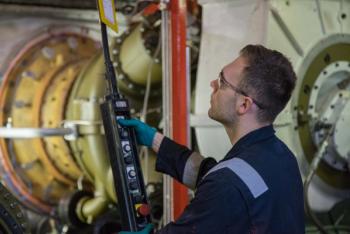
EthosEnergy’s turbine workshop and Performance Center work hand-in-hand to maintain operators’ turbine equipment and provide remote operations and monitoring.
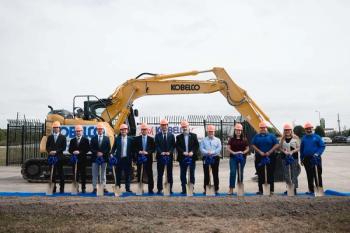
The expansions include six compressor overhaul stations, two drive-through loading bays, an extruder overhaul station, and additional storage and maintenance spaces.
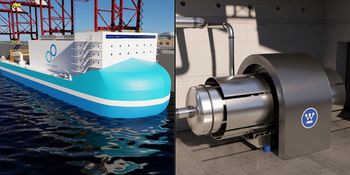
In addition to integrating the eVinci microreactor in modular nuclear plants, Westinghouse and CORE POWER will develop a regulatory pathway to license its floating nuclear power plant design.
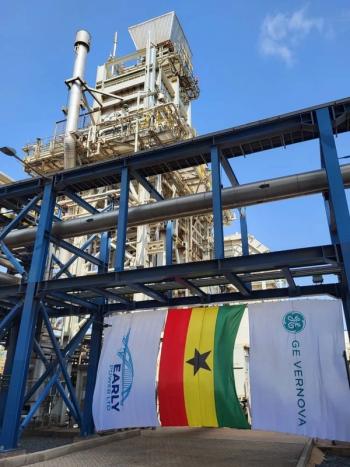
The planned 515-MW power plant project will increase Ghana’s thermal generation capacity by over 7%.
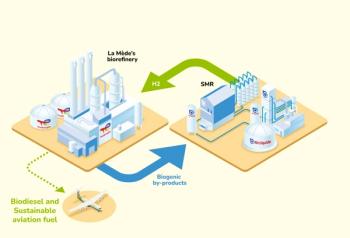
The production unit generates hydrogen using recycled biogenic by-products, which is then fed back into TotalEnergies’ biorefinery to produce biofuels and sustainable aviation fuels.
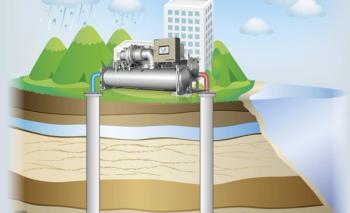
The storage system uses the ETI-Z25.HP heat pump-type centrifugal chiller that will use groundwater to cool the Japanese plant.
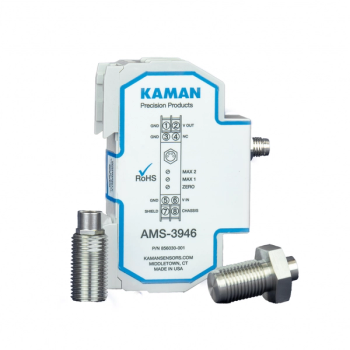
The high-precision, non-contact displacement sensors complement condition monitoring systems by measuring and monitoring runout, speed, and changes in machine vibration profiles.

GridOS orchestration software will help Tensio AS and Linea AS manage energy demands with increased visibility, accelerated decision-making, and built-in security.
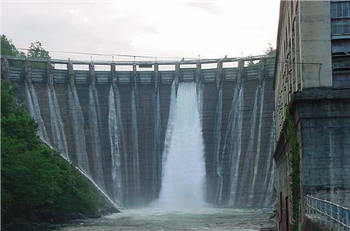
Per a 10-year power purchase agreement, the Smoky Mountain hydroelectric facilities will supply over 14 GWh of carbon-free energy to Tennessee Valley Authority customers.
The sCO2 power generation system will be installed at TC Energy’s compressor station in West Virginia, recovering unused waste-heat exhaust from a gas turbine compressor.