
Compressors
Latest News
Advertisement
Latest Videos
Podcasts










Advertisement
More News
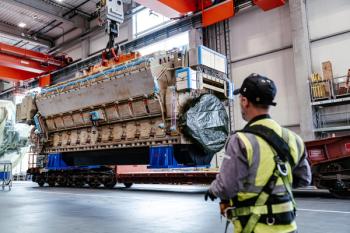
The company used a digital process to identify and track branded components throughout the entire supply chain, with prominently labeled components redesigned by engineering.
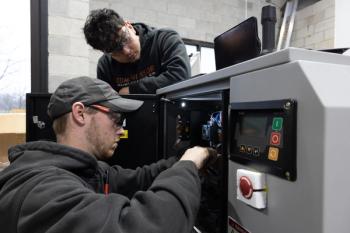
Compressor Maintenance will offer a range of services to support compressed air needs, including system consultation, preventative maintenance programs, OEM parts, and more.

High-pressure gas pipelines may be vital to increasing natural gas transportation capacity, but certain cost, compression, and materials challenges present widespread integration roadblocks.
The Turbomachinery News Network, for the week of April 13, 2026, covers news from Capstone Green Energy, Baker Hughes, Turboden, the Myth Busters, and the AI power surge’s impact.
The Myth Busters, Klaus Brun and Rainer Kurz, dive into gas turbine degradation by covering the various types, their causal factors, and how it may impact performance.
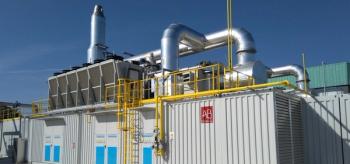
Integrating Turboden’s mechanical vapor recompression system allows steam production to exceed 5 tons per hour within a single cogeneration unit, depending on plant configuration.

As hyperscalers, colocation providers, and utilities invest in new power generation infrastructure, rotating equipment and flow control technologies will play a critical role.
The Turbomachinery News Network, for the week of April 6, 2026, covers news from Baker Hughes, Turboden, Glenfarne Group, Fervo Energy, and CERAWeek 2026 by S&P Global.

The C800 microturbines will provide on-site electricity while recycling thermal energy to support the resort’s heating demands, including its wave pool and hot-water amenities.
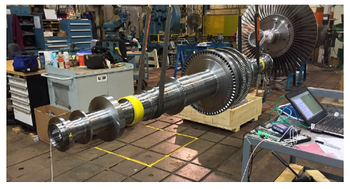
Integrating detailed vibration analyses with critical operational data allows for a more proactive, diagnostic approach to turbomachinery health monitoring.
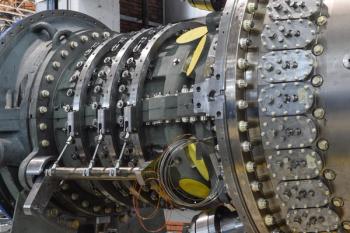
San Matias Pipeline selected the NovaLT16 gas turbine platform for its performance, efficiency, delivery advantages, and suitability for midstream gas compression applications.

Eliminating unsteady load, modifying component geometry, and/or damping the entire system may reduce unwanted fluid-structure interactions and prevent turbomachinery damage.
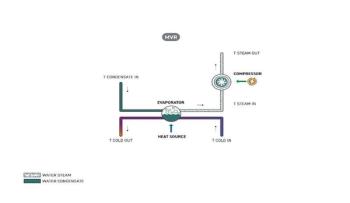
The system will replace Co.Pro.B.’s gas-fired boiler, instead recovering low-pressure vapor and upgrading it to the required process conditions for sugar juice production.
The Turbomachinery News Network, for the week of March 30, 2026, covers news from Mechanical Solutions, Kawasaki, Mitsubishi, the Myth Busters, and Everllence.

The company leveraged its infrastructure and technical expertise at the Merritt Island site, achieving high flow rates to support the rocket during final countdown and liftoff.
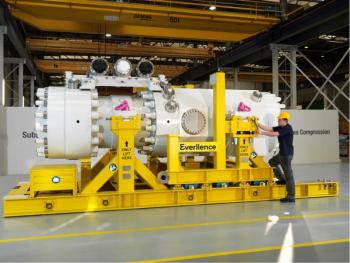
Sealed compressors leverage compactness, low maintenance requirements, and emissions-free operation to enable solutions across the ongoing energy transition.

The partners will install test rigs to illuminate the combustion mechanism of actual engines, utilize advanced measurement technology, and pursue gas turbine combined-cycle plants.
Turbomachinery International is celebrating Klaus Brun and Rainer Kurz, the Myth Busters, for 20 years of consistent debate, exploration, and the technical breakdown of all things rotating machinery.
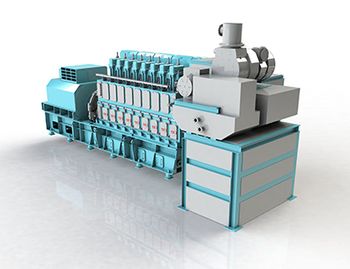
The new engine was developed with knowledge from fundamental studies on hydrogen-related materials and combustion, in addition to durability testing of fuel injection systems.

Mechanical Solutions supports industrial sectors by providing testing, analysis, and troubleshooting services for rotating machinery.
The Turbomachinery News Network, for the week of March 23, 2026, covers news from Ebara Elliott Energy, Hanwha Power, Kawasaki, Baker Hughes, and the March 2026 print magazine.

The March 2026 issue covers centrifugal compressor shaft vibration, quality assurance and control, sealed compressors, fluid-structure interactions, high-pressure pipelines, and more.
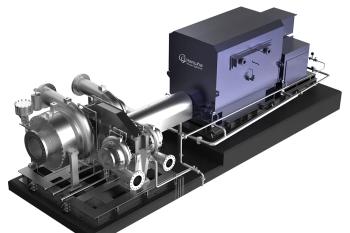
The integration propels both companies beyond their individual, equipment-focused structures into solution providers with response capabilities across gas turbines and compressors.
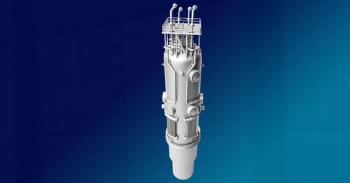
The companies aim to integrate advanced turbomachinery with a small modular reactor design to supply high-temperature process steam to petrochemical facilities.
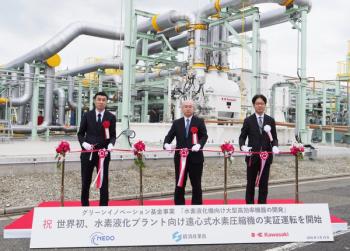
The next-generation unit is designed to deliver high compression ratios for large volumes of refrigerant hydrogen in a compact footprint, while improving overall plant efficiency.
Advertisement
Advertisement
Trending on Turbomachinery Magazine
1
Hitachi Energy, Ansaldo Energia Sign MOU on Integrated Turbine and Grid Solutions for Data Centers
2
Powering Data Centers - Thinking beyond basic generation
3
How Polymer Labyrinth Seals Can Improve Centrifugal Compressor Performance
4
How Polymer Labyrinth Seals Improve Centrifugal Compressor Performance
5