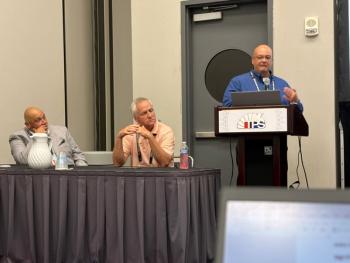
At the 2026 Turbomachinery and Pump Symposia, John Crane’s Brian Kalfrin explained why volatile natural gas liquids demand custom-engineered seals, from face material selection to installation and flush rates.
The 2025 Turbomachinery & Pump Symposia covered hydrogen compressor testing, new gas seal technology, various pumps for ammonia and supercritical operations, and more.
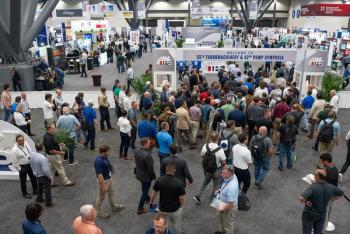
Historically, the Turbomachinery & Pump Symposia (TPS) has been a hotbed of technical knowledge, professional development, networking, and problem solving among those involved in rotating equipment and fluid-handling systems, yet the exposure to new technologies and best practices remains a highlight of every conference. TPS 2025 was no different, with companies like Siemens Energy, John Crane, Ebara Elliott Energy, and Sulzer revealing the latest in pump, compressor, and gas seal endeavors.
Jake Wharton, Lead Application & Hydraulics Engineer for Sulzer, led a session titled
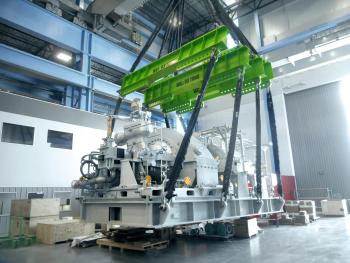
Although compressors are traditionally associated with compressible fluids, Wharton explained that centrifugal pumps can outperform them under certain supercritical conditions. Pumps typically operate with three to seven blades, a configuration that balances efficiency and reliability. Their lower inlet angle, slower operating speeds, and ability to handle higher mass flow rates make them well-suited for dense, compressible fluids.
Radial pump designs have shown success in managing low-density supercritical flows. Both horizontal and vertical configurations are viable, depending on footprint, application, and site requirements. Performance calculations, however, remain a demanding exercise, as engineers must consider inlet temperature, pressure, flow rate, fluid composition, discharge pressure, and non-dimensional pump curves.
Centrifugal pumps are capable of tolerating small amounts of cavitation, especially when dealing with fluid densities similar to water or water vapor. Operators are advised to maintain a clear margin between inlet conditions and the saturation line to prevent cavitation-related instabilities. In practice, this requires careful monitoring and process control, but the results can provide stable, long-term operation even under challenging service conditions.
The message from Sulzer’s Wharton was clear: Centrifugal pumps and compressors are not competitors in the supercritical space. Each technology offers unique strengths, and together they provide a robust toolkit for industries managing CO2 and other supercritical fluids. Conventional centrifugal pumps, with the right mechanical and hydraulic modifications, are not just viable—they’re often the better choice.
August Brautigam, Pump Development Engineer at Ebara Elliott Energy, addressed the benefits of sealless pumps—including
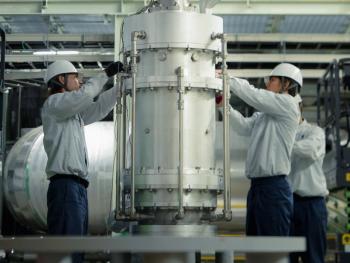
Unlike pumps with mechanical seals, magnetic drive and canned motor pumps eliminate external leakage points, one of the most common failure points in traditional designs. The density difference between liquid and gaseous ammonia further highlights the importance of robust equipment, as liquid ammonia is 950 times denser than its gas form, meaning even small leaks or seal failures could have serious operational and safety consequences.
Magnetically driven pumps offer several advantages that make them especially well-suited for ammonia applications. Their most important benefit is leak-free operation, since the magnetic coupling eliminates the need for mechanical seals. By design, mag-drive pumps also require less maintenance because there are fewer wear components, lowering costs and reducing downtime in continuous operations like fertilizer production or ammonia co-firing plants.
Additionally, canned motor pumps provide reliable operation and can handle ammonia at varying pressures and temperatures without compromising efficiency. Their compact, integrated design allows for space savings and simplified installation, making them well-suited for ammonia storage, transfer, and industrial processing applications where safety, reliability, and low maintenance are critical.
By eliminating mechanical seals and their risks, sealless pumps are poised to play a larger role in these operations. Brautigam emphasized that selecting the right pump—whether magnetic drive or canned motor—depends on the specific application, but the advantages are clear: greater reliability, fewer maintenance needs, and most importantly, a safer working environment.
Hydrogen is poised to play a central role in the global energy transition, but safely and efficiently compressing this gas remains a technical challenge. Siemens Energy has taken a step toward addressing that challenge by designing and testing a
At TPS 2025, Brian Grosso of Siemens Energy discussed the milestone that was achieved through more than 30 rigorous tests, validating not only the feasibility of single-piece rotor construction but also its potential to redefine how hydrogen and other low molecular weight gases are compressed at scale.
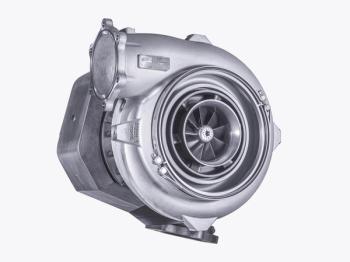
The single-piece rotor design overcomes compression limitations. By eliminating joints, hollow bores, and blade attachments, the rotor avoids the stress concentrations that typically limit tip speed. The result is a rotor capable of higher tip speeds, greater pressure ratios, and fewer impeller stages, making the machine more compact and efficient.
The prototype uses raw forged steel, heat-treated and machined on a five-axis mill. It integrates four inducer-type compressor stages with unshrouded impellers, designed to run at up to 28,540 rpm. The rotor assembly underwent overspeed and high-speed balancing tests, recording low amplitudes of just 0.16 mil in balance machines.
By proving the viability of a single-piece rotor in hydrogen compression, Siemens Energy has opened new possibilities for cleaner, more efficient gas handling. The results—steady performance, measurable efficiency gains, and a larger stability margin—indicate that this innovation can play a critical role in scaling up hydrogen infrastructure.
Chevron encountered persistent reliability issues with a traditional bellows seal: It was prone to coking, which is an accumulation of solid debris that interferes with sealing surfaces and eventually compromises performance, causing premature wear and unwanted downtime. To address the challenge,
John Crane's Robert McManus and Jamie Cetrone discussed the new gas seal technology, its benefits, and how the design performed within a 2-year window for high-temperature hydrocarbon services. The new unit—a non-contacting gas-lubricated seal—eliminates the negative impact of solids, reduced Chevron’s downtime, and significantly minimized energy usage up to 90 – 95%.
According to McManus, John Crane replaced the conventional bellows seal with a dual-pressurized metal bellows wet seal that uses gas rather than liquid support systems. The technology is built around a non-contacting, gas-lubricated concept that eliminates the need for cooling water and prevents solids from interfering with the sealing interface. At the core of the design are spiral grooves etched into the stationary seal ring. These grooves create a thin, stable fluid film between the sealing faces, enabling them to run without physical contact.
Chevron’s upgrade demonstrated that installing an improved seal does not sacrifice operational uptime. Seal replacement can be completed within a single day, keeping disruption to a minimum. The cost of replacement, typically between $25,000 and $35,000, is modest compared with the potential savings in maintenance, reliability, and energy efficiency. The seal requires no auxiliary systems like steam quench, further reducing ongoing expenses and maintenance demands.
11 months ago
How to Manage Stress Concentrations in Turbomachines11 months ago
Turbomachinery International: November/December 2025