

Texas LNG selected Gulf LNG Tugs of Texas to build, deliver, and operate tugboats for Glenfarne Energy Transition’s export facility.
Texas LNG selected Gulf LNG Tugs of Texas to build, deliver, and operate tugboats for Glenfarne Energy Transition’s export facility.
This episode of the TurboTime Podcast takes a deep dive into the biomass industry with Chris Quijano, the Director of Operations at IHI Power Services.
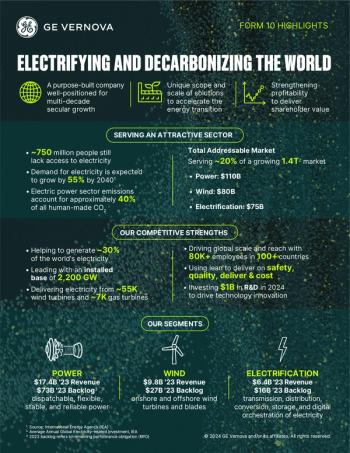
GE filed a Form 10 registration statement for GE Vernova, which is expected to spin off in early April.

The memorandum of understanding between Ansaldo Nucleare and SACE will establish up to €2 billion in financing to support the execution of nuclear development within the country.
The U.S. DOE awarded Eden $1.4 million in federal funding to develop technologies to stimulate the generation of geologic hydrogen from iron-rich formations.
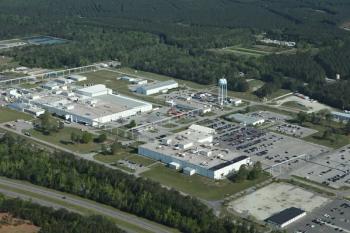
Global Nuclear Fuel, a GE Vernova business, has received approval from the Nuclear Regulatory Commission to manufacture nuclear fuel enriched with uranium-235.
Qatar Gas Transport Company (Nakilat) has been selected by QatarEnergy to own and operate up to 25 conventional-size LNG carriers in accordance with Time Charter Parties.
The 20% stake in the Peru LNG export plant includes natural gas liquefaction assets, a 408 km pipeline, two storage tanks, a marine terminal, and a truck-loading facility.

Ansaldo Nucleare will contribute to the development of SMRs within Europe through establishing new units, decommissioning old ones, extending plant life, and developing new fusion technologies.
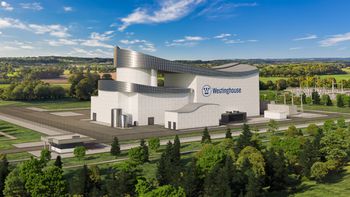
Per the agreement, these partners will collaborate to deploy Westinghouse’s AP300 small modular reactor fleet in the U.K.’s North Teesside region.
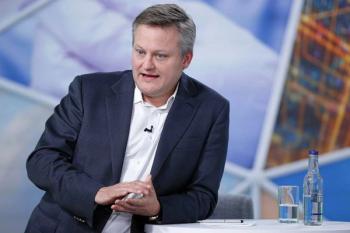
bp’s low-carbon hydrogen pipeline has been increased from 1.8 MTPA to 2.9 MTPA, and the company looks to focus on upcoming blue hydrogen projects in 2024.
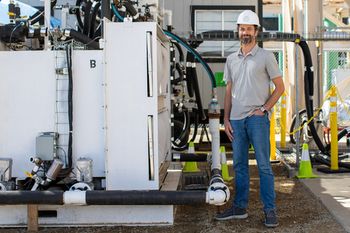
Avnos will use the $36 million in Series A funding to grow its team, deploy hybrid direct air capture assets, and open an R&D facility to further develop its technology.
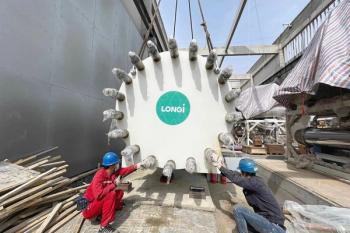
These Chinese electrolyzer manufacturers have secured orders for a total of 65 MW for projects in Oman, Thailand, and Uzbekistan.

In Part II of our TurboTime podcast on compressor drivers, the Myth Busters discuss gearboxes and dual-drive compressors.
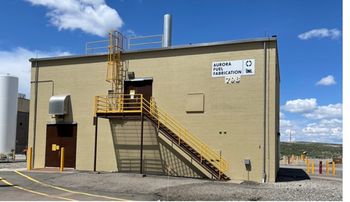
The United States DOE has reviewed and approved the safety design strategy for the Aurora fuel fabrication facility at the Idaho National Laboratory.

Speakers at Baker Hughes Annual Meeting said natural gas and LNG have significantly lower emissions than their hydrocarbon counterparts, but are they the right energy source for the future?

The agreement is designed to accelerate commercial-scale direct air capture solutions, and the companies will collaborate on three CO2 removal projects to advance this goal.

Several speakers and panels at the Baker Hughes Annual Meeting took issue with President Biden’s pause on LNG licensing.
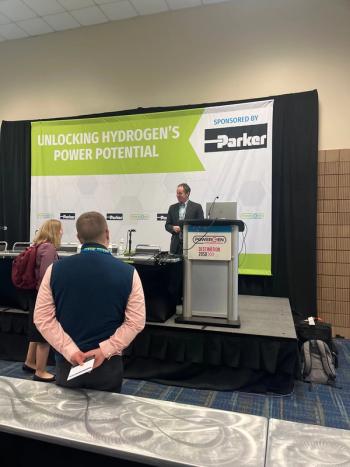
Benjamin Emerson, Senior Research Engineer at Georgia Tech discussed the challenges with low-carbon gas turbine fuels, including methane, hydrogen, and ammonia.
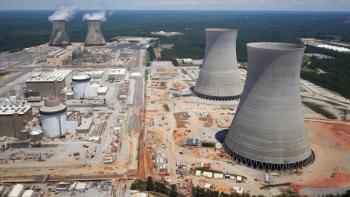
Kevin Huberty of Sargent & Lundy provided a comprehensive review of SMR technology, including the various models, ongoing projects, government regulations, and major vendors within the industry.
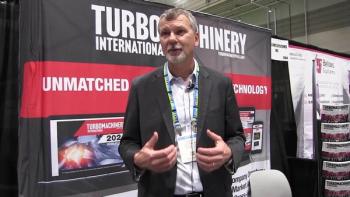
Turbomachinery International spoke with Rich Voorberg, President of Siemens Energy North America, about his top takeaways from POWERGEN 2024.
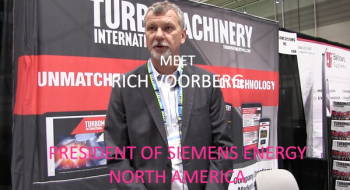
Turbomachinery International interviewed Rich Voorberg, President of Siemens Energy North America, at POWERGEN 2024.
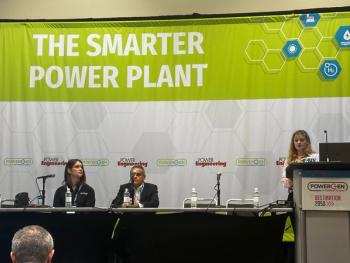
Neel Parikh, Key Expert - Performance Optimization, Siemens Energy, and Tara Singleton, Utility Engineer, Jeffrey Energy Center, discussed the set-up, implementation approaches, and the use of closed-loop optimizer solutions.
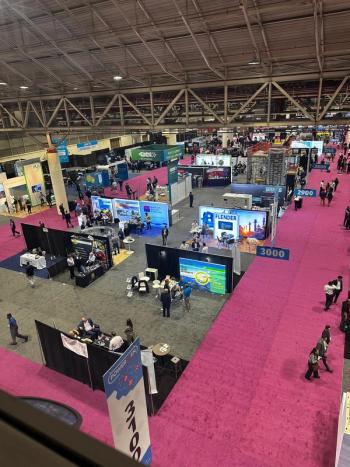
At POWERGEN 2024, Mark Scherluebbe, managing director at EY-Parthenon Energy, outlined a plan to transform older, less efficient fossil fuel plants into facilities that make use of modern intermittent resources.
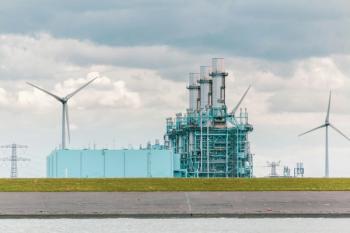
At POWERGEN 2024, the Electric Power Research Institute (EPRI) discussed ammonia and hydrogen, co-firing, technical challenges, and shared the latest on large-scale hydrogen projects.