

Auxiliaries & Components
Latest News
Advertisement
Latest Videos
Advertisement
More News
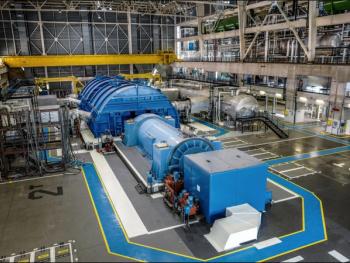
Each half-speed steam turbine, featuring improved cycle efficiency, will be coupled to a hydrogen and water-cooled GIGATOP 4-pole generator synchronized to the 50-Hz Polish grid.
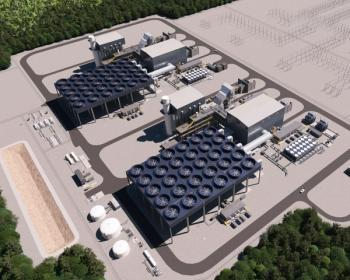
Once operational, the combined-cycle facility will support long-term, system-wide load growth for homes, businesses, and existing industries across Monroe County, GA.

Per Klaus Brun and Rainer Kurz, properly executed scheduled and condition-based maintenance methods are adequate to prevent failures, costly shutdowns, and interventions.
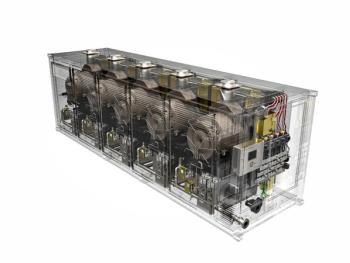
The system’s combined heat and power configuration supports a pyrolysis thermochemical reaction, which converts swine waste into biogas in a closed-loop design.
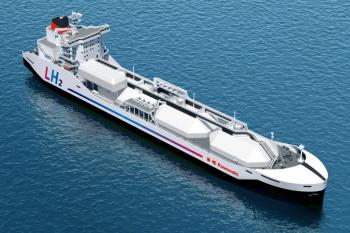
The 40,000-cubic-meter vessel will support a government-backed demonstration aimed at commercializing the global transport of liquefied hydrogen by 2030.
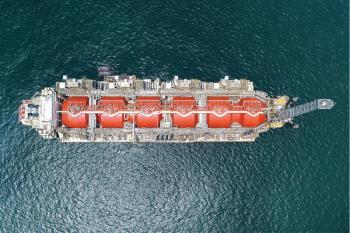
The MK2 project will convert Golar’s LNG tanker—Fuji LNG—into a floating LNG vessel with an expected annual production capacity of 3.5 million tons.
Turbomachinery News Network: Ansaldo Energia, Rotating Machinery Services, Energy Transfer, and more
The Turbomachinery News Network, for the week of December 29, 2025, covers news from Rotating Machinery Services, Doosan Enerbility, Ansaldo Energia, Baker Hughes, and Energy Transfer.
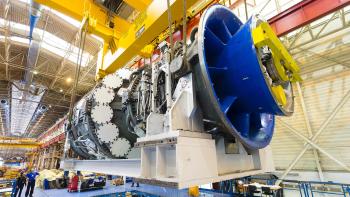
Hydrogen is gaining traction as the turbomachinery industry balances near-term emissions reductions with long-term fuel flexibility amid evolving regulatory and infrastructure conditions.
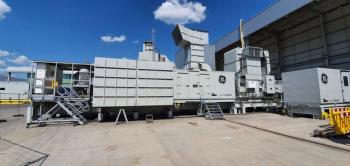
Rising electricity demand from data centers and AI is driving renewed investment in gas turbines in 2025, as utilities and operators seek fast, reliable power solutions amid grid constraints.
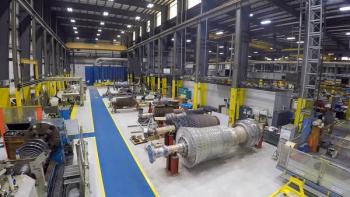
The company will integrate EthosEnergy’s TurboCare team, technical data, and intellectual property to support a broad range of OEM technologies.
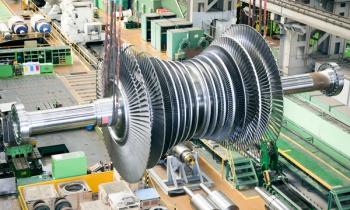
The Qatar Facility E Independent Water and Power Production facility includes a 2,400-MW gas-fired, combined-cycle power plant approximately 10 km southeast of Doha.
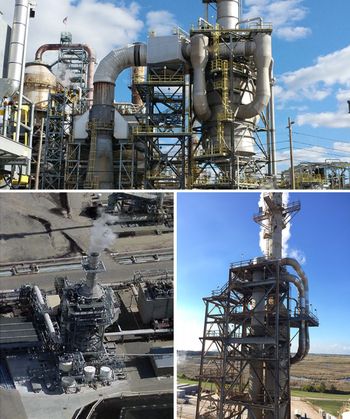
The wet gas scrubbing system features high SO2-removal efficiency, low-pressure operation, reduced energy consumption, and accommodates site layouts with customizable designs.
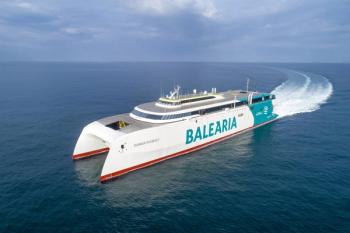
Beyond supplying power for on-board electrical systems, the mtu Series 4000M35S power generators can secure the propulsion system during emergency scenarios.
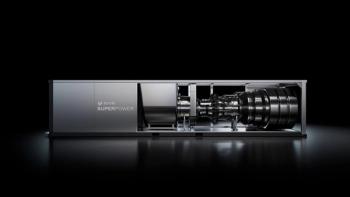
The Superpower gas turbine deploys extreme-temperature technology to maintain generation capacity—without water—in hot, arid, and challenging environmental conditions.
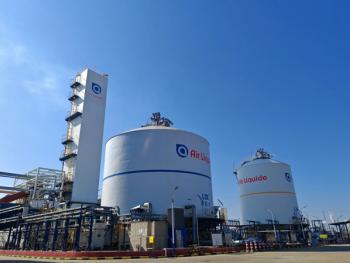
The electrical upgrade will increase oxygen capacity by 10% and immediately reduce CO2 emissions by 224,000 tons per year, furthering China’s industrial decarbonization goals.
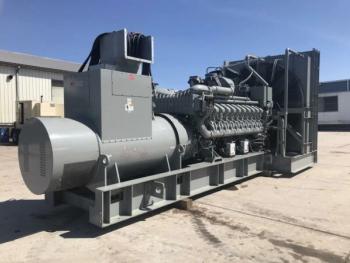
The environmental product declarations tracked data on resource consumption, emissions, waste generation, and recyclability for the mtu Series 4000 DS2500 and 1600 systems.
The Turbomachinery News Network, for the week of December 8, 2025, covers news from Rolls-Royce, Mitsubishi Heavy Industries, Air Products, and John Crane.
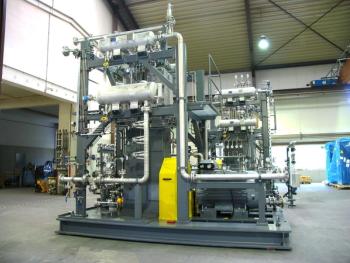
KOHO and Svanehøj previously collaborated on numerous high-profile shipbuilding projects, such as the Northern Lights LCO2 carriers and Höegh Autoliners’ Aurora-class design.
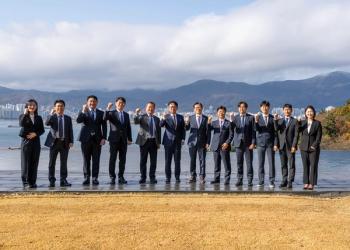
The partners will pursue aging power projects across Central Asia, Africa, and Southeast Asia, executing plant performance improvements and rehabilitation work.
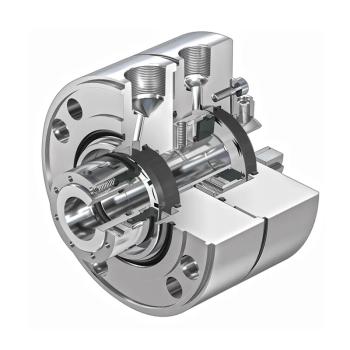
Previously, the undisclosed operator shifted its strategy from equipment availability to long-term reliability and enlisted John Crane to solve sealing inconsistency issues at a flagship refinery.
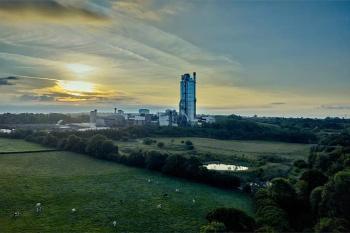
Following capture with the Advanced KM CDR Process, the CO2 will be transported via pipeline for permanent sequestration in depleted gas fields beneath Liverpool Bay.
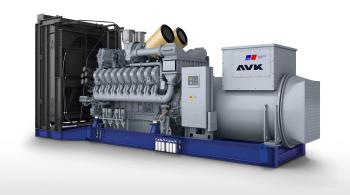
The mtu Series 4000 power generator is a low-carbon solution for data centers, allowing users to quickly generate up to 2.8 MW of electricity while filtering CO2 from exhaust gases.

Many turbomachinery diagrams are outdated and recommend axial machines over centrifugals, but modern technological advancements must be considered for industrial applications.

Among other causal factors, stress concentrations accumulate in areas with sharp edges, so filleting and chamfering is required to enable the smooth flow of stress streamlines.
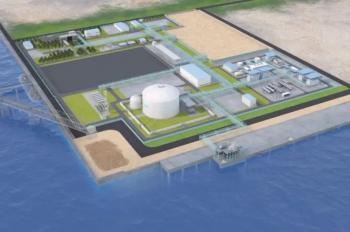
By 2030, the Kawasaki LH2 Terminal will enter operation alongside a newly constructed liquefied hydrogen carrier, advancing Japan’s effort to establish a hydrogen supply chain.
Advertisement
Advertisement