


Henrik Harksen of MTU Maintenance talks about its new MRO shop that will support a 30% increase in shop visit volumes.
Henrik Harksen of MTU Maintenance talks about its new MRO shop that will support a 30% increase in shop visit volumes.
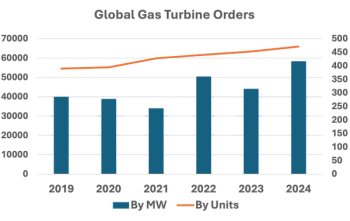
Order activity spiked in 2024, as the gas turbine market was driven by data center development and natural gas and LNG.

Nikon’s research program at the University of Waterloo will combine direct energy deposition and titanium powders to repair damaged or worn aerospace components.

Do engineers overrely on computational tools? The Myth Busters deep dive into engineering tools, such as CFD and FEA, used to design turbomachines.

The SOLO micro-modular reactor, currently being assessed by the Nuclear Regulatory Commission, delivers 1 Mwe of clean power and uses helium gas cooling to prevent meltdown.
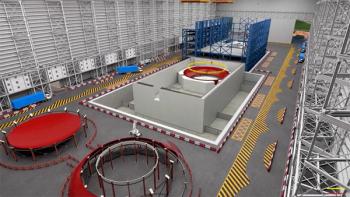
The company is seeking investments in its supply chain and is moving through evaluations conducted by the U.K. nuclear industry’s independent regulators.
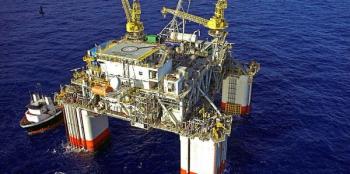
The Ballymore subsea tieback contains three wells connecting to Chevron’s Blind Faith facility, expected to produce up to 75,000 barrels of oil per day.

Renovating modern dry gas seals and their systems increases reliability.
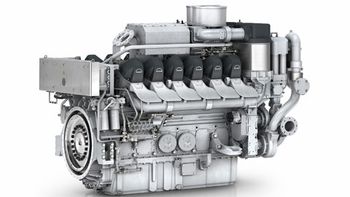
Dietmar Zutt of MAN Energy Solutions says the latest combustion and control technologies allow the 175D to achieve rapid maneuverability, acceleration, and long cruising ranges.

In addition to a second C65 microturbine, the plant will use a Vergent remote monitoring controller to track the combined heat-and-power system.
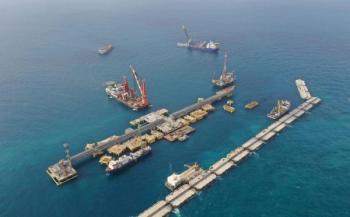
Once loaded onto the floating LNG vessel, the cargo was cryogenically cooled, liquefied, and stored for transfer to nearby carriers.
The Turbomachinery News Network, for the week of April 14, 2025, covers news from EnBW, the Port of Rotterdam, Venture Global, MAN Energy Solutions, and GE Vernova.
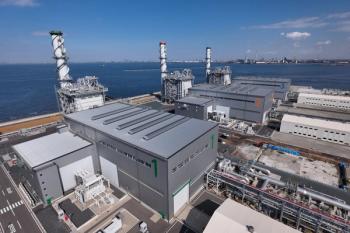
The Goi Thermal Power Station, retired in 2018, came back online with equipment from Toshiba and GE Vernova, adding 2.3 GW of electricity to Japan’s grid.
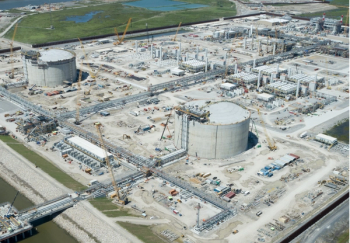
The North American LNG export facility comes online following numerous challenges, including COVID, two hurricanes, and manufacturing issues, due to its unique liquefaction configuration.
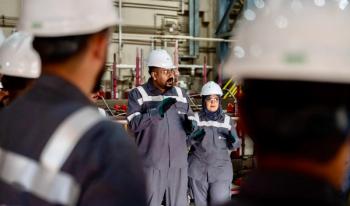
Asma Abaalkhail of GE Vernova says its Live Outage system and all-Saudi team completed the gas turbine outage operation safely and days ahead of schedule.
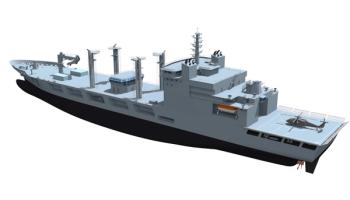
MAN Energy Solutions India will install and commission all propulsion equipment, including two Indian-made shaft generators for each newbuild fleet support ship.
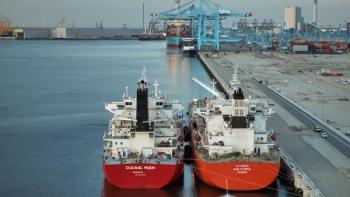
The collaboration among Trammo, OCI, and James Fisher Fendercare raised Rotterdam’s port readiness level, enabling future bunkering with ammonia-fueled ships.
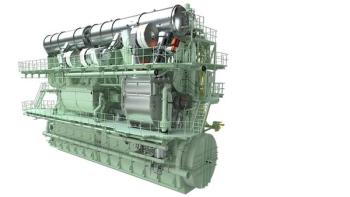
Eight ultra-large container ships, equipped with the ME-GI dual-fuel engine, will be delivered to an undisclosed Asian owner after manufacturing and installation.

Although torsional vibrations in turbomachinery trains are usually well-controlled, issues should be addressed proactively during the design process.
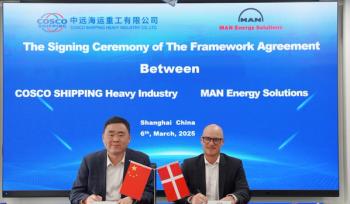
COSCO will contribute its engineering, procurement, and construction work for large-scale ship modifications, while MAN will deliver engine and digital technology solutions.

The new hydrogen power plant will replace a coal-fired unit and fuel oil-fired gas turbines and will be completely decommissioned by mid-2026.
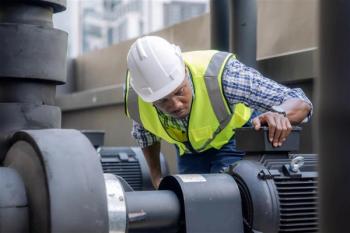
Centrifugal compressor manufacturers are incorporating magnetic bearings, variable-speed drivers, digital twins, and more to improve performance and reliability.
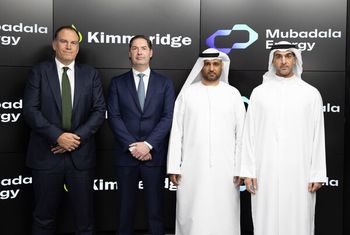
Kimmeridge’s SoTex holds interests in the Eagle Ford gas business and Commonwealth LNG, which owns the Calcasieu Pass liquefaction and export facility in Louisiana.

The Turbomachinery News Network, for the week of April 7, 2025, covers news from Baker Hughes, Concepts NREC, GE Aerospace/MTU, Shell, and Mitsubishi Heavy Industries.
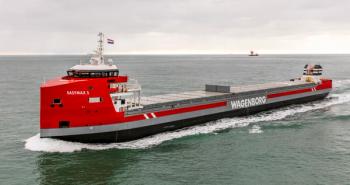
The 175D generator sets will deliver extra power to the CO2 pump and dynamic positioning systems during discharge/offshore storage operations.