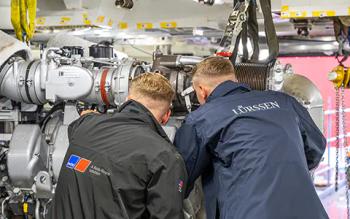
The agreement reorganizes the cooperation, accelerates processes, simplifies procedures, and defines common standards for yacht engines and propulsion systems overhauls.
The agreement reorganizes the cooperation, accelerates processes, simplifies procedures, and defines common standards for yacht engines and propulsion systems overhauls.
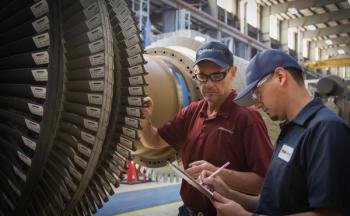
The company’s local team will repair capital parts, supply spare parts, and provide turnkey on-site services in France and its overseas territories.
The initial facility will sequester and permanently store 75,000 tons of CO2 per year while generating 5 MW of clean electricity with plans for full-scale operation in 2030.
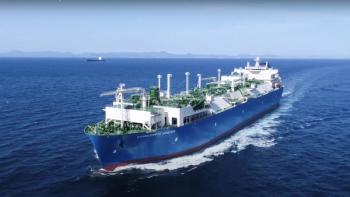
The retrofit project will reduce the FSRU’s environmental footprint and carbon emissions by reliquefying boil-off gas and returning it to the cargo tanks.
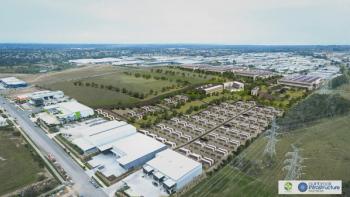
The company will supply and commission the power conditioning systems, power plant controller SCADA systems, and capacitor bank/harmonic filter.
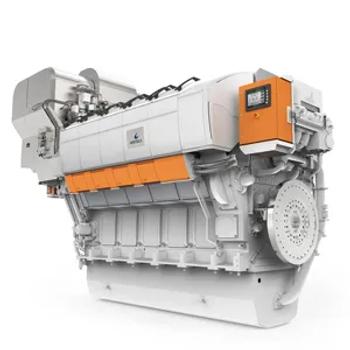
The dual-fuel to spark gas conversion project will modify Chevron’s LNG carrier engines to use spark ignition versus diesel pilot fuel to initiate combustion.
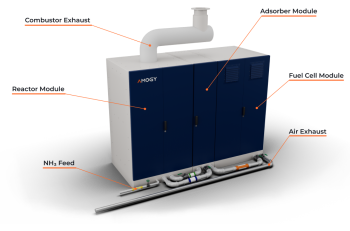
Ammonia-cracking technology uses catalyst materials to crack ammonia into hydrogen and nitrogen at lower reaction temperatures, reducing heating and maintenance requirements.
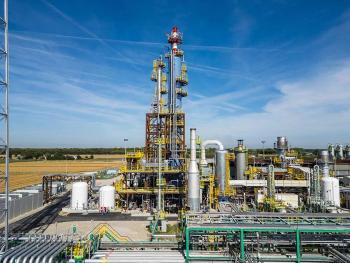
The KM CDR capture process treats low-CO2 flue gas from a natural gas turbine driving a turbocompressor to lower emissions by 90% with peaks of 96%.
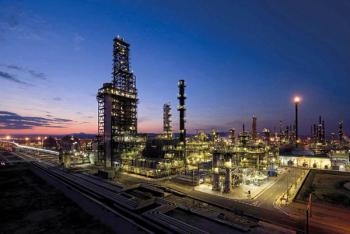
Green hydrogen produced through water electrolysis will support the Castellón refinery’s transition to an integrated energy hub.
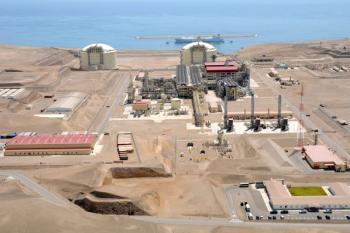
Peru LNG’s assets consist of a natural gas liquefaction plant, a 490-km pipeline, two storage tanks, a marine terminal, and a truck loading facility.
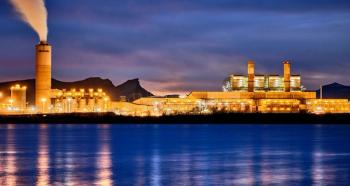
The Four Corners Power Plant would use amine-based, post-combustion carbon capture to remove more than 95% of the plant’s CO2 from flue gas.
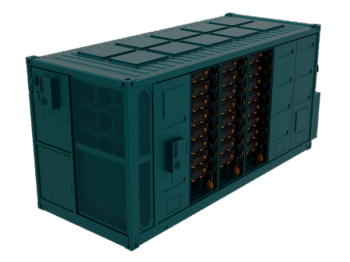
The containerized solution has thermal management and high-speed edge analytics to monitor the storage system’s charge, health, and safety.
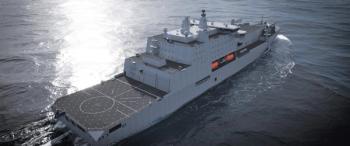
The company will provide 12 V32/44CR propulsion engines, six L32/44CR gensets, selective catalytic reduction for each engine, and three Alpha CP propellers.

The Myth Busters, Klaus Brun and Rainer Kurz, talk about surge and choke on a compressor map.
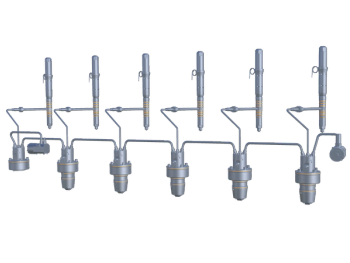
Initially installed on the MAN 49/60DF engine, the fuel-injection system comprises a uniform high-pressure pump, a newly developed injector, and the CR 1.6 valve group.
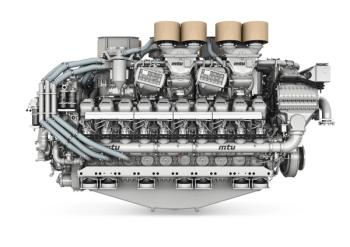
The mtu Series 1163 and 8000 engines are now equipped with exhaust gas aftertreatment, which reduces NOx emissions by 75% compared to the previous IMO II limits.
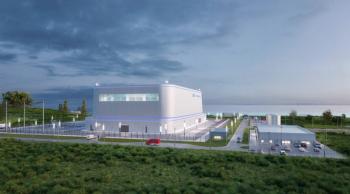
Earlier this year, GE Hitachi Nuclear Energy (GEH) received a £33.6 million Future Nuclear Enabling Fund grant from the U.K. Department for Energy Security and Net Zero.
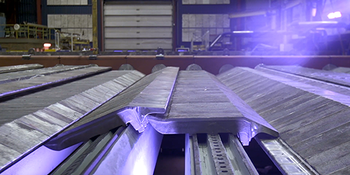
Varme Energy’s proposed waste-to-energy facility will be located northeast of Edmonton, processing up to 200,000 tons of waste per year.
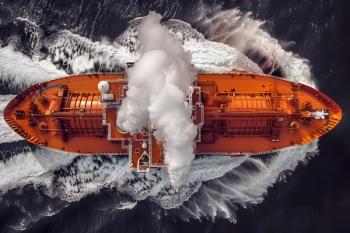
The global LNG market has been impacted by new liquefaction capacity, price fluctuations, and political intervention yet it is slated to grow at an unprecedented rate through 2028.

Sixteen gas engines will be installed across two power plants and an LNG terminal in East Malaysia and Indonesia.
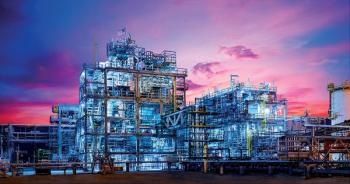
ADNOC will acquire a 35% equity stake in the Baytown facility, which is slated to be the world’s largest, upon startup, low-carbon hydrogen and ammonia production plant.

The Myth Busters, Klaus Brun and Rainer Kurz, talk about compressor maps—what they are, how they are generated, and what they are useful for.
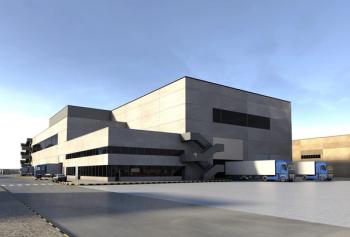
General Electric Saudi Advanced Turbines (GESAT) manufactures and supplies gas turbines for power generation plants in up to 10 countries, including Saudi Arabia.
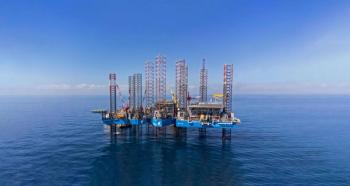
In addition to Fast LNG’s Free Trade Agreement authorization from the Department of Energy (DOE), the asset can now export LNG to global customers and markets.

Small modular reactors (SMRs) and advanced modular reactors (AMRs) benefit from lower investment costs, operational flexibility, and construction modularity.