
Feature|Videos|November 25, 2026
Lessons Learned: Real-World Compressor Lifecycle Decisions
Key Takeaways
- Learn how one operator extended compressor life by adding capacity instead of replacing existing units.
- Discover how a changing gas-to-oil ratio led one plant to install an adjacent compression system rather than scrap working equipment.
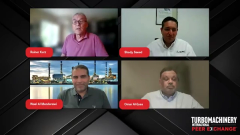
Wael Al Mandarawi and Omar Al-Essa share real-world examples of how their teams extended compressor life instead of scrapping working equipment.
Advertisement
Episodes in this series
Sponsored by FS-Elliott
Rather than treat every aging or capacity-constrained compressor as a candidate for replacement, this episode's panelists share how they've found alternatives. Wael Al Mandarawi describes how, when air demand grows, his team adds compressors rather than replacing existing units that are still running without failure, while noting that process and gas compressors are less flexible, since the driver often has to change alongside the compressor.
Omar Al-Essa shares a specific example from just before the COVID-19 pandemic: as the gas-to-oil ratio of the oil wells his team supported shifted, mid-1990s compressors could no longer serve as the primary compression equipment. Rather than replace them outright, the team installed an adjacent new compression plant with its own dehydration system and added a jumper connection between the old and new units, increasing operational flexibility to use them interchangeably.
These field examples offer plant teams a practical playbook for extending asset life when demand or process conditions shift.
Advertisement
Related to this article
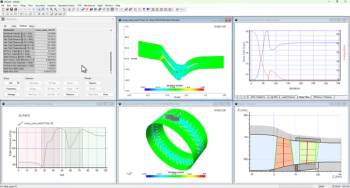
Version 2026.2 of Concepts NREC's Agile Engineering Design System adds LLM-connected tools for compressor design and documentation, a preliminary pump design environment, an AxCent link to Simcenter STAR-CCM+ and new MAX-PAC machining strategies.
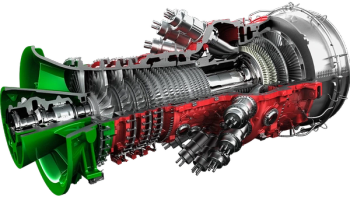
Trungnam Group selected Ansaldo Energia for two GT36 H-class turbines and generators for a new greenfield plant in Vietnam, with delivery set for 2029 and commercial operation targeted by the end of 2030.
Siemens Energy Consortium to Supply Two SGT-800 Gas Turbines for TAURON's Będzin CHP Plant in Poland
TAURON Ciepło signed a €94.5 million supply contract and a €49.9 million, 12-year service agreement for two 49.9 MW SGT-800 turbine sets, with deliveries due in September and October 2029.

The new campus consolidates corporate functions, New Generation Systems Engineering and customer support, with phased build-out continuing through 2027.
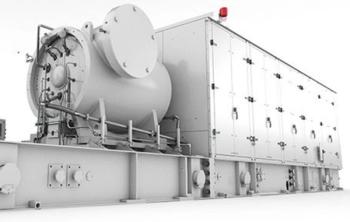
Caterpillar's Power & Energy sales rose 18% to $8.8 billion in the third quarter, with turbine orders now extending into 2030 and no slack in capacity.

Siemens Energy reported record fiscal 2026 orders of €68.1 billion, with Gas Services orders up 45.9% to €32.8 billion, and raised its 2030 margin target to 20% to 22%.
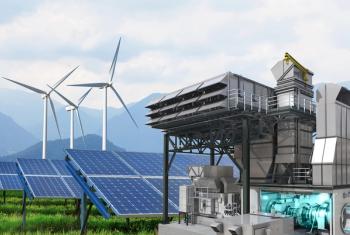
GE Vernova says the LM2500XPRESS aeroderivative package has been validated on blends of up to 50% hydrogen and the LM6000VELOX package has been tested on 100% hydrogen at its new Greenville, S.C., test facility.
Mee Industries CEO Thomas Mee III explains how wet compression differs from inlet fogging, what it costs compared with a new turbine and how it can help plants meet capacity commitments.
Advertisement
Advertisement
Trending on Turbomachinery Magazine
1
Concepts NREC Adds LLM-Connected Design Tools to AEDS 2026.2
2
Ansaldo Energia to Supply Two GT36 Gas Turbines for LNG Power Plant in Vietnam
3
The Economics of Modernizing vs. Replacing Aging Compressors
4
Advancing Gas Turbine Combustion Systems for Lower Emissions and Greater Flexibility
5