
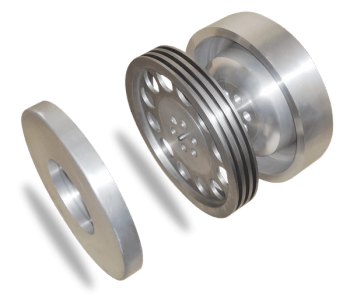
Global Compression Services issues OEM and aftermarket components and manufactures specialized parts tailored to the natural gas sector.
Global Compression Services issues OEM and aftermarket components and manufactures specialized parts tailored to the natural gas sector.
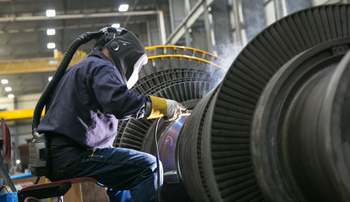
Ana Amicarella, CEO of EthosEnergy, said One Equity Partners’ expertise in mergers and acquisitions will help expand service offerings and improve operational efficiencies.
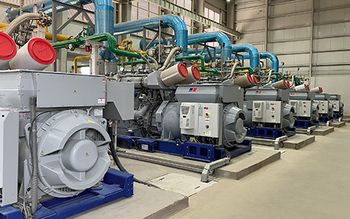
The plant has no access to the public grid, so each Rolls-Royce mtu genset supplies 2,500 kW of electric power to manufacture medium-density fiberboard.
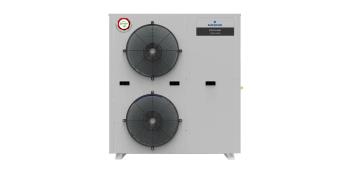
Residential and commercial heat pump programs aim to develop pumps that perform at sub-zero temperatures and as emissions-effective rooftop units.
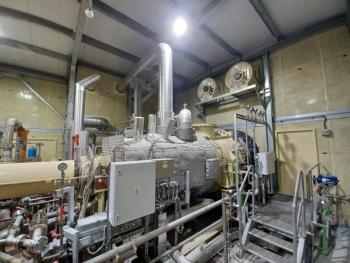
The new power plant replaces the current facility and reduces natural gas consumption by 15%.
The new lubricants and additives include FSE-TurboCool 32 and 46; FSE-TurboCool PG; FSE-TurboCool FG; and FSE-TurboCool CC to minimize downtime and extend lifespan.
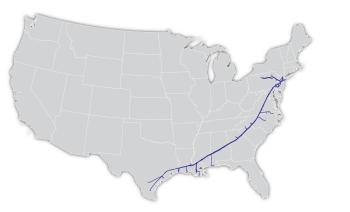
The project adds 423,400 Dth/d of fully contracted pipeline capacity, two new all-electric compressor stations, and upgraded metering stations to accommodate demand.
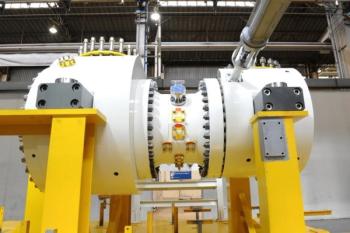
Eight main refrigeration compressors driven by LM6000PF+ gas turbines and eight expander compressors will assist Woodside Energy in executing Phase 1 of Louisiana LNG.

Simplifying, re-configuring, and eliminating certain components can increase a turbomachine’s reliability, efficiency, and safety and, in some cases, reduce costs.
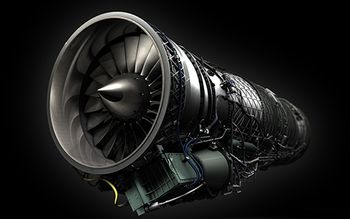
The engines, to be assembled at the ITP Aero Facility and modularized by Rolls-Royce, are scheduled for delivery to the Spanish Air Force in 2029.
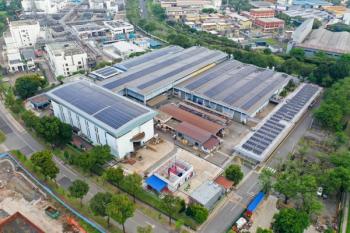
With over $80 million currently invested in the Global Repair Service Center, GE Vernova plans to meet regional population growth and power demand by keeping its fleets operational.

Klaus Brun and Rainer Kurz explain root-cause analysis and how it assists operators in diagnosing turbomachinery failures.
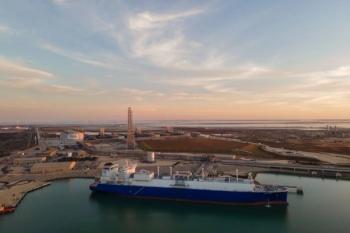
Corpus Christi LNG Stage 3 consists of seven midscale liquefaction trains, with an expected total production capacity of over 10 mtpa of LNG upon Bechtel’s completion and delivery.
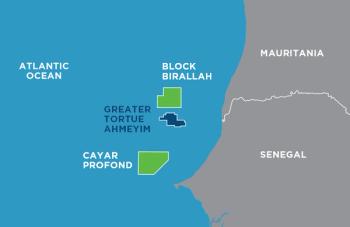
Gas began flowing from wells to the floating production, storage, and offloading vessel and once commissioned, Phase 1 is expected to produce around 2.3 mtpa of LNG.

EthosEnergy provides aftermarket maintenance, repair, and overhaul, as well as outsourced operations and maintenance to power generation and industrial customers.
This year, the turbomachinery industry was characterized by several trends—from technological innovation to gas turbines’ supporting role in renewably integrated grids.
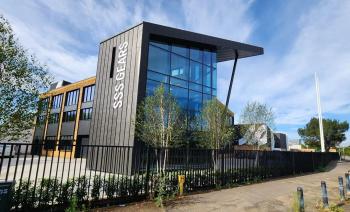
This year’s Turbo Tour schedule took us around the country and over the pond, with insights on GE Vernova, EthosEnergy, Mechanical Solutions, and SSS Gears.
The top 10 articles of 2024 include cover stories on the LNG industry and digital twins, Myth Busters and Turbo Tips columns, a gas turbine sales report, and much more.

This year, the TurboTime podcast covered a range of topics such as compressor technology and physics, geothermal, biomass, and micro-reactor power generation.
A collection of thought leaders, turbomachinery experts, and government representatives gathered throughout 2024 at major conferences: POWERGEN, WTUI, Turbo Expo, and TPS.
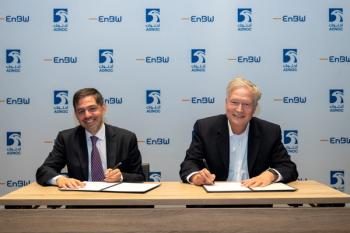
EnBW will receive 0.6 mtpa of LNG over 15 years, with deliveries starting in 2028 after Ruwais LNG enters commercial operation.
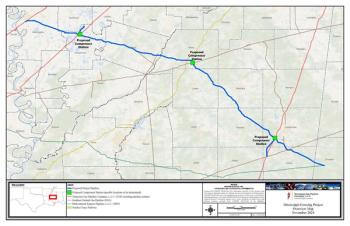
The project will transport up to 1.5 Bcf/d of natural gas from Greenville, MS to Butler, AL, using two compressor stations with access to third-party pipelines.
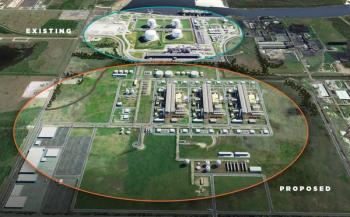
The Lake Charles LNG export facility will be constructed on a brownfield regasification site with four existing LNG storage tanks, two deep water berths, and other LNG infrastructure.
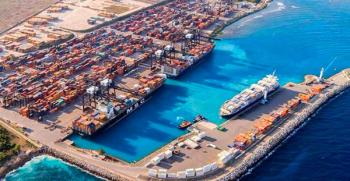
Carlos Mousadi, Regional Commercial Leader at GE Vernova, shares how the company is supporting the Dominican Republic’s energy transition to renewables and natural gas.
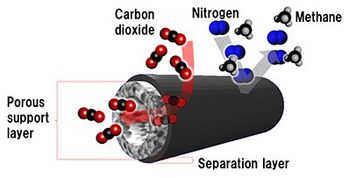
Toray will upscale prototypes and conduct demonstration tests with biogas, natural gas production development companies, and other partners to accelerate practical application.